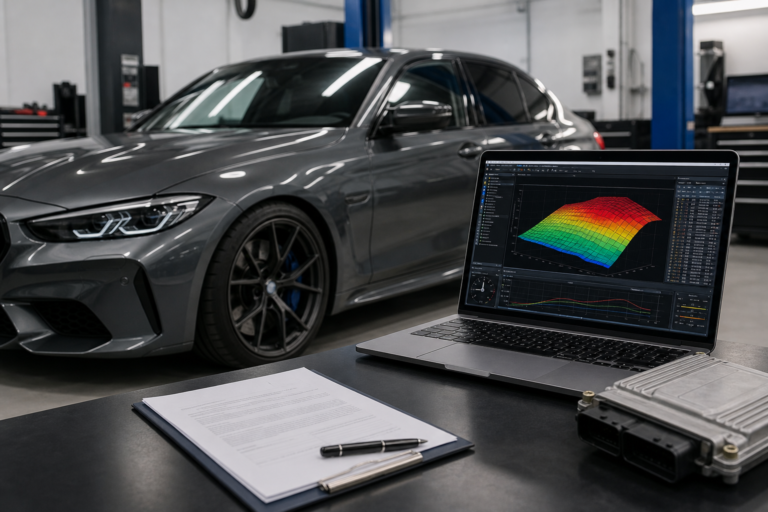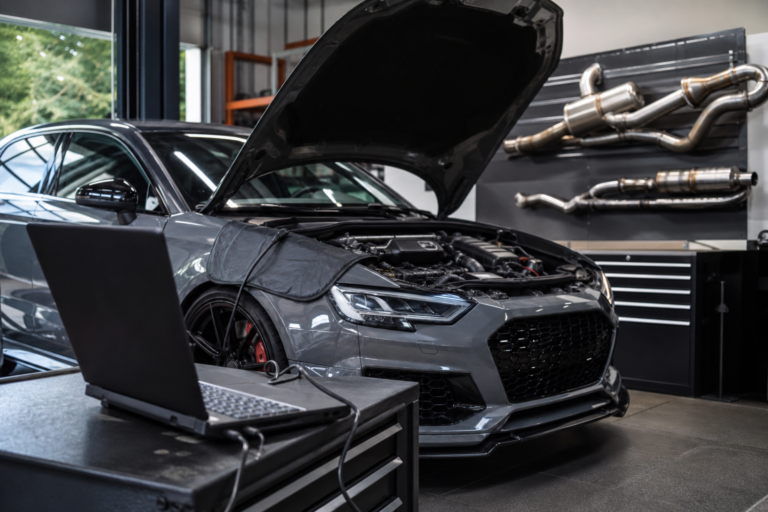
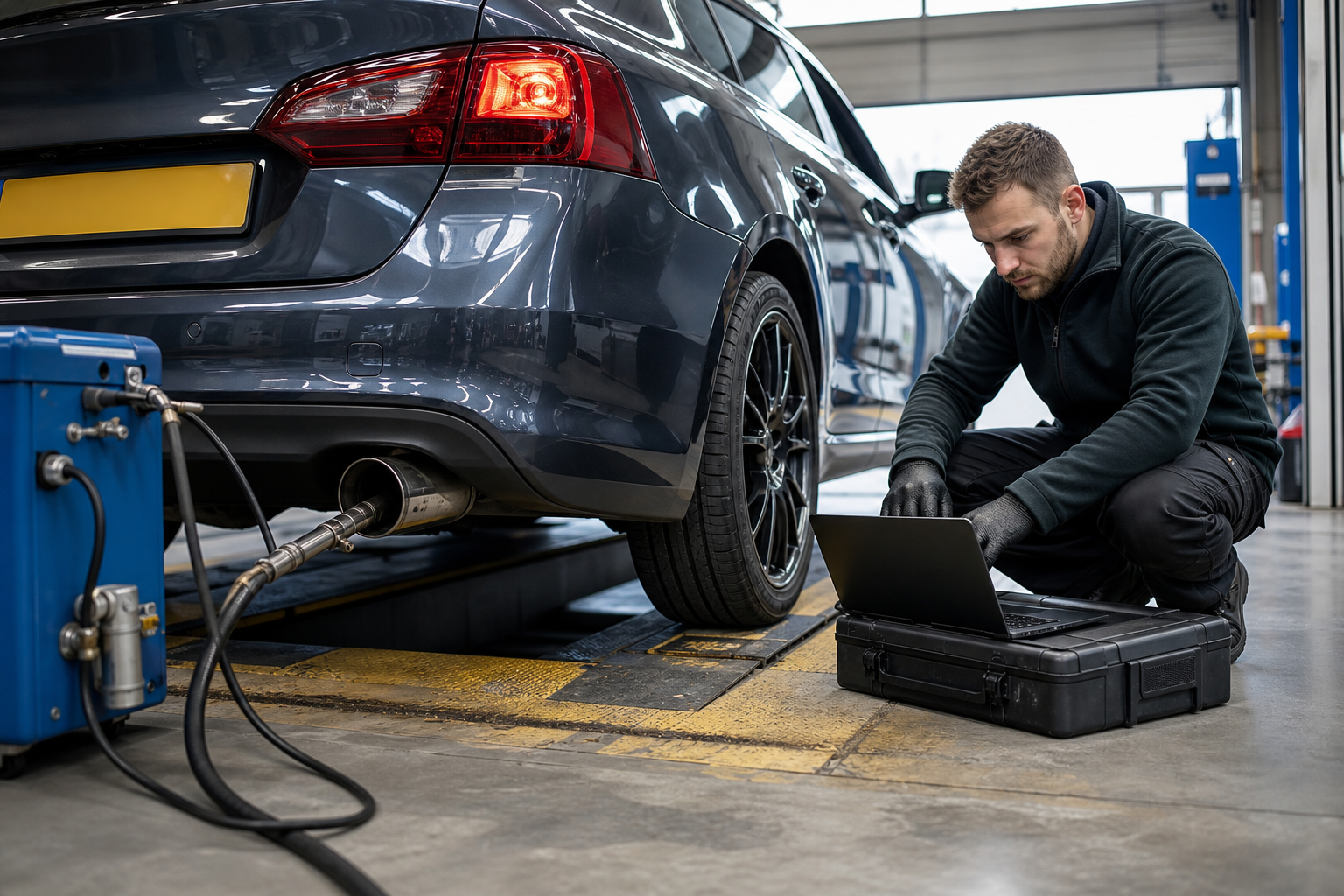
An ECU remap does not automatically make a car or van fail its MOT. The test does not normally involve comparing the ECU calibration with the vehicle’s original factory software. However, a remapped vehicle can fail if the calibration contributes to excessive emissions, visible smoke, an engine management warning light or another testable defect.
There is an important distinction between a responsible performance calibration on a healthy vehicle and software or hardware changes that disable, remove or conceal problems with emissions-control systems. Passing the MOT also does not provide blanket confirmation that every modification is lawful, safe or acceptable to your insurer.
This guidance reflects the DVSA MOT inspection manual in force in August 2026 and the status of the government’s open emissions consultation on 25 August 2026.
Does remapping affect an MOT result?
It can, but usually through the condition and behaviour of the vehicle rather than the simple fact that its ECU has been remapped.
The MOT assesses items including exhaust emissions, visible smoke, the engine malfunction indicator lamp, exhaust condition, noise and identifiable emissions-control equipment. A calibration that retains the required emissions systems and allows a mechanically sound vehicle to stay within the applicable limits may not create an MOT issue.
A vehicle is more likely to fail where tuning has:
- caused petrol emissions or diesel smoke opacity to exceed the permitted limit;
- triggered an engine management light;
- created poor combustion, misfires, unstable idling or excessive smoke;
- been combined with the removal or obvious modification of a catalytic converter, diesel particulate filter or another emissions component;
- attempted to conceal a fault instead of repairing its underlying cause; or
- contributed to exhaust noise that is unreasonably above that expected from a comparable vehicle with a standard silencer.
If you are unsure what a calibration changes, our guide to what an ECU remap actually changes explains the main parameters in driver-friendly terms.
What does the MOT inspect on a remapped vehicle?
| MOT area | What the tester considers | How tuning may be relevant |
|---|---|---|
| Petrol emissions | Applicable carbon monoxide, hydrocarbon and lambda limits, along with visible smoke | Poor fuelling, misfires, exhaust leaks or an unsuitable calibration may produce a failure |
| Diesel emissions | Smoke opacity and, on a vehicle fitted with a DPF, visible smoke during the metered check | Excessive fuelling, boost problems, injector faults or DPF issues may increase smoke |
| Engine warning light | On applicable vehicles, the malfunction indicator lamp must operate correctly and not indicate a malfunction | A warning light caused by tuning or an unresolved fault can be recorded as a major defect |
| Emissions equipment | Visible and identifiable equipment must not be missing, obviously modified or obviously defective | Removal, obvious alteration or tampering can result in a major defect even if tailpipe readings appear acceptable |
| Exhaust and induction system | Leaks that could affect emissions and the security and condition of the exhaust | Hardware fitted alongside a remap must remain secure, suitable and free from relevant leaks |
| Exhaust noise | Noise must not be unreasonably above that expected from a similar vehicle with a standard silencer | Some exhaust modifications and sound-focused calibrations can attract attention to excessive noise |
The current DVSA MOT inspection manual states that an engine modified in any way must still meet the exhaust-emissions or smoke-opacity requirements applicable to the vehicle.
A compliant calibration is different from emissions tampering
A conventional remap adjusts parameters such as torque demand, boost control, fuelling and throttle response. That does not necessarily require emissions-control equipment to be removed or disabled.
A responsible road-vehicle calibration should be developed around the vehicle’s mechanical condition and intended use. It should not rely on hiding warning lights, suppressing genuine faults or defeating systems that the vehicle needs to control emissions.
By contrast, an MOT problem may arise when software changes are connected with:
- a missing or visibly altered diesel particulate filter;
- a missing or obviously modified catalytic converter;
- an obviously defective exhaust gas recirculation system;
- problems with selective catalytic reduction or AdBlue-related equipment;
- disabled fault monitoring that conceals an active mechanical problem; or
- hardware modifications that cause emissions or noise to exceed the relevant standard.
The DVSA manual classifies manufacturer-fitted emissions-control equipment that is missing, obviously modified or obviously defective as a major defect. Evidence that a diesel particulate filter has been tampered with is also a major defect. A software change cannot make missing or visibly tampered hardware MOT-compliant.
Can an engine management light cause an MOT failure?
Yes, where the malfunction indicator lamp check applies to the vehicle. The tester checks that the light illuminates and then goes out as expected. A lamp that is inoperative or indicating a malfunction is a major defect under the current manual.
Turning off a diagnostic trouble code or warning-light request is not the same as repairing the fault. For example, a boost leak, failing oxygen sensor, injector problem or inefficient catalytic converter may continue to affect emissions and drivability even if its dashboard warning has been suppressed.
If a warning light appears after a remap, the best next step is diagnosis rather than repeatedly clearing the code. Record the code and operating conditions, then investigate whether the cause is the calibration, a disturbed connection or an existing component that is no longer working correctly.
Petrol remaps and MOT emissions
Applicable petrol vehicles undergo a gaseous emissions test. Depending on the vehicle, the tester may assess carbon monoxide, hydrocarbons and lambda at specified engine speeds. Dense blue or clearly visible black smoke can also cause a failure.
A well-calibrated petrol vehicle still needs a healthy ignition, fuelling and emissions system. Potential causes of a tuned petrol vehicle failing include:
- worn spark plugs or weak ignition coils causing misfires;
- incorrect air-fuel control;
- intake or exhaust leaks;
- faulty oxygen sensors;
- a damaged or inefficient catalytic converter;
- injector or fuel-pressure problems; and
- an unsuitable calibration for the installed hardware or fuel.
More power does not automatically mean an emissions failure. The outcome depends on the vehicle, its condition, its calibration and whether it remains within the limits applied during the test.
Diesel remaps, smoke and the DPF
Diesel vehicles subject to emissions testing are checked for smoke opacity. The tester uses the manufacturer’s plate value where applicable or the relevant default limit. For a vehicle fitted with a diesel particulate filter, visible smoke during the metered check is a major defect.
An overly aggressive diesel calibration can increase smoke by requesting more fuel than the engine can burn cleanly under the available airflow and boost conditions. However, smoke after tuning is not always a calibration issue. It may point to:
- a blocked or damaged air filter;
- a split boost hose or intercooler leak;
- injector wear or imbalance;
- turbocharger or boost-control problems;
- an overloaded or defective DPF;
- sensor faults; or
- poor maintenance.
A calibration should not be used to work around a mechanical fault. If the vehicle is already displaying warning lights, producing smoke or struggling with regeneration, arrange diagnosis before tuning or presenting it for an MOT. Our pre-remap health-check guide explains why the vehicle’s baseline condition matters.
Does a Stage 1 remap pass an MOT?
“Stage 1” is a tuning label, not an MOT classification or compliance guarantee. A Stage 1 vehicle is assessed under the same MOT standards as another vehicle of its age, type and fuel.
A Stage 1 calibration on a healthy, otherwise standard vehicle may be less likely to create problems than a package involving extensive hardware changes. Nevertheless, the quality and suitability of the file matter. Different vehicles also have different tolerances, emissions systems and maintenance histories.
Drivers comparing tuning levels should consider the supporting hardware, fuel requirements, gearbox limits and intended use rather than relying on the stage name alone. See our comparison of Stage 1 and Stage 2 remapping for more detail.
Should you return the ECU to standard before the MOT?
Not automatically. If the vehicle is healthy, retains its required emissions equipment, has no warning lights and meets the applicable test standards, restoring the original calibration simply because an MOT is due may be unnecessary.
Returning the ECU to standard is also not a substitute for repairing damaged, missing or altered hardware. It will not automatically resolve a blocked DPF, faulty sensor, exhaust leak, worn catalytic converter or another underlying problem.
If you are concerned about the quality of an existing tune, have the vehicle assessed before the test. Useful information includes the calibration provider, the claimed tuning level, any hardware changes and whether a copy of the original ECU file is available.
Pre-MOT checklist for a remapped car or van
One to two weeks before the test
- Check the dashboard warning-light sequence. Confirm that the engine management light illuminates with the ignition and goes out after starting, where applicable.
- Scan and diagnose faults. Do not simply erase codes without identifying their cause. Clearing a code can remove information that would help diagnosis.
- Inspect the exhaust. Look for leaks, loose joints, damage and signs of alteration around the catalytic converter, DPF and other visible emissions equipment.
- Watch for smoke. Persistent black, blue or unusual smoke needs investigation before the test.
- Check fluid levels. Make sure engine oil and coolant are at the correct level. Do not drive or test a vehicle with abnormal noises, low oil pressure or another potentially serious fault.
- Review recent behaviour. Poor starting, uneven idle, reduced power, frequent DPF regeneration or increased fuel consumption may indicate a developing issue.
- Confirm the installed calibration. If the vehicle was bought already modified, establish what software and hardware changes have been made where possible.
On the day of the MOT
- Drive the vehicle normally beforehand so that it reaches its usual operating temperature, provided it is safe and lawful to do so.
- Do not arrive with the fuel level extremely low, particularly if the vehicle has recently displayed a fuel-system warning.
- Take relevant invoices or records if a DPF has previously been opened for a legitimate cleaning procedure, as the DVSA manual allows evidence of a valid reason to be considered.
- Tell the tester about any unusual operating procedure that is genuinely required by the manufacturer.
- Do not attempt a last-minute hard drive to “clear it out” if the vehicle has warning lights, abnormal smoke, overheating or mechanical symptoms.
Do you need to tell your insurer about a remap?
You should contact your insurer and disclose the modification. A remap can change the vehicle’s power, torque or other operating characteristics, and insurers decide how modifications affect their cover and terms.
Government vehicle-modification guidance advises owners to contact their insurance provider to check whether changes affect their motor insurance. An MOT pass does not confirm that an undisclosed remap is accepted under your policy.
Emissions law may become stricter beyond the MOT
As of 25 August 2026, the Department for Transport is consulting on stronger rules governing emissions from vehicles already in use in Great Britain. The proposal would cover maintenance and modifications that cause a vehicle to stop meeting the emissions requirements applicable when it was manufactured and registered. It expressly considers both hardware and software alterations.
This is an open consultation rather than final legislation. Responses close at 11:59pm on 6 September 2026, and the government envisages legislation being passed in summer 2027 followed by a proposed six-month lead-in period.
The practical message is that drivers should not treat an MOT pass as permission to defeat an emissions-control system. Read our separate overview of what the 2026 UK emissions-tampering consultation could mean for modified vehicles.
The bottom line
ECU remapping does not automatically cause an MOT failure. What matters during the test is whether the vehicle meets the applicable emissions, warning-light, equipment, exhaust and roadworthiness standards.
A suitable calibration should complement a healthy vehicle rather than conceal faults or compensate for defective emissions equipment. Before booking a remap, consider the vehicle’s condition, intended use and the quality of the calibration. A file tailored to the vehicle and its hardware is different from applying an unidentified generic tune without adequate checks; our guide to custom remaps and generic tuning files explains the distinction.
If you own a tuned vehicle in Sunderland and are concerned about warning lights, smoke, drivability or the suitability of its current calibration, contact Limited Edition Tuning to discuss the symptoms and appropriate diagnostic next steps. No tuner or garage can legitimately guarantee an MOT pass, because the result depends on the vehicle’s condition when it is tested.