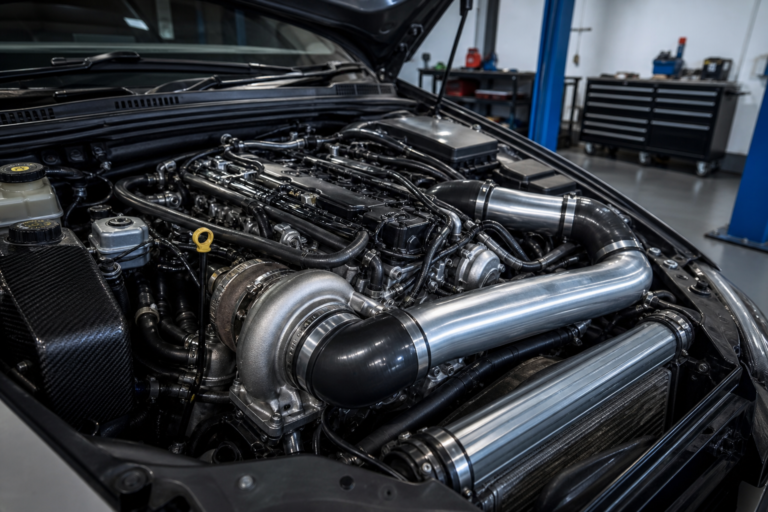
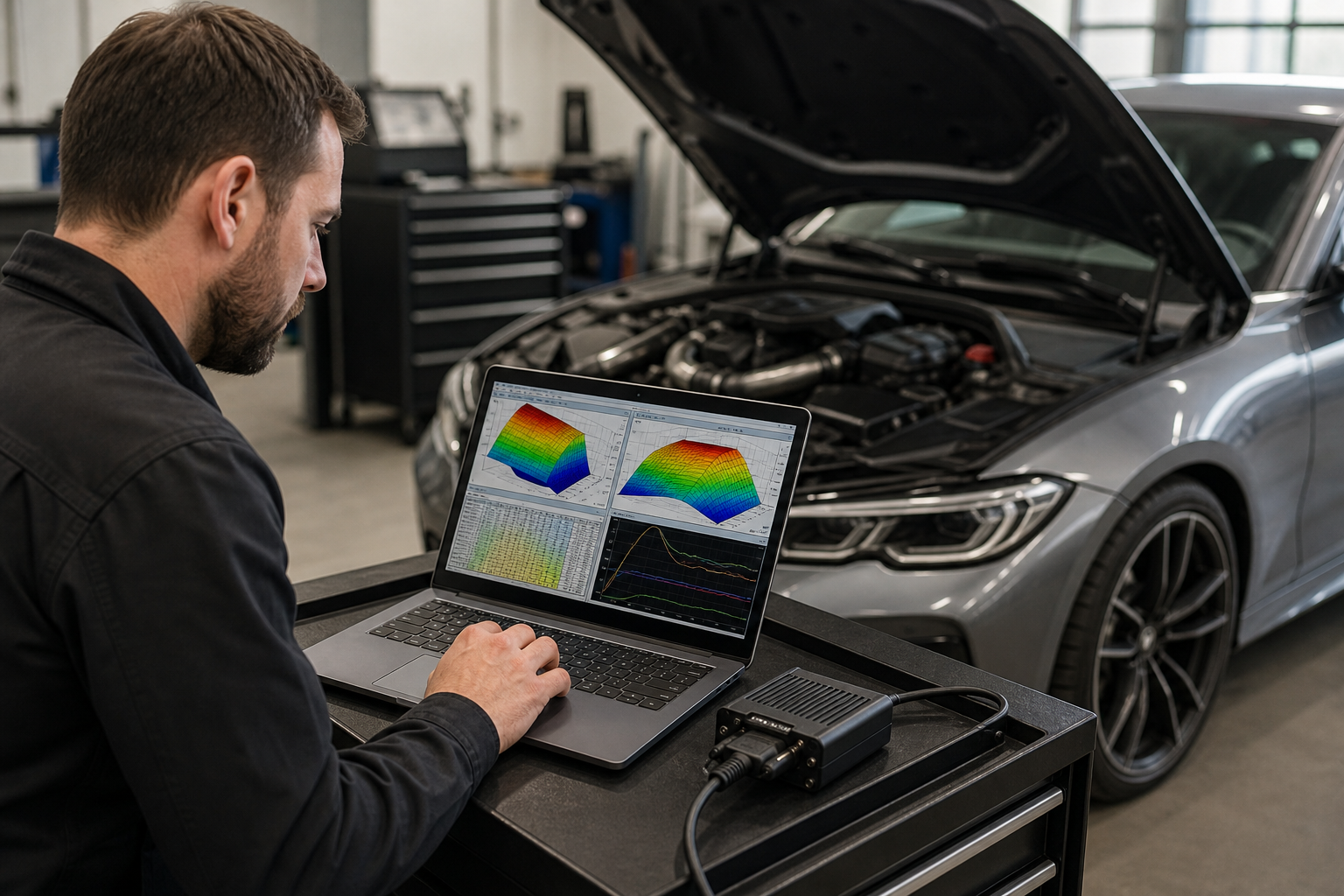
The main difference between a custom remap and a generic tuning file is the process behind the calibration. A generic file is normally prepared for a particular engine, ECU or software version and then applied without extensive adjustment for the individual vehicle. A custom remap involves assessing the vehicle, reviewing its original calibration and adapting the tune using relevant diagnostic information and data logs.
That does not automatically make every generic file poor or every tune described as “custom” good. The important question is what has actually been checked, measured and adjusted for your vehicle.
Custom remap vs generic remap at a glance
| Area | Generic tuning file | Custom remap |
|---|---|---|
| Starting point | A pre-developed calibration for a compatible vehicle or ECU software version | May begin with a proven base calibration, followed by vehicle-specific review and adjustment |
| Vehicle condition | May receive only basic compatibility or diagnostic checks | Condition and diagnostic information should influence whether tuning proceeds |
| Original ECU file | Matched to an existing file or software identification | Read, identified and reviewed as part of the calibration process |
| Data logging | May be limited or not included | Relevant operating parameters can be logged before or after programming |
| Modifications | Usually intended for a standard or predefined hardware setup | Can be adapted to confirmed, compatible hardware changes |
| Intended use | Generally based on a broad performance target | Can consider road use, towing, commercial loads, response preferences or a performance-focused setup |
| Revisions | The same compatible file may be used without individual changes | Logs and calibration review can identify where revision is appropriate |
What is a generic tuning file?
A generic tuning file is a calibration developed for a known vehicle specification, ECU family or software version. It may be a perfectly valid starting point when the vehicle is standard, healthy and correctly matched to the file.
“Generic” should not necessarily be taken to mean that one identical file is installed on every vehicle. Modern ECUs have different software versions and calibration identifiers, so compatibility still matters. The limitation is that the file may not have been adjusted using information collected from the individual vehicle in front of the tuner.
Two cars of the same model and engine can differ because of mileage, maintenance, software updates, component condition, fuel, previous repairs and hardware modifications. A file that is compatible on paper does not reveal how each vehicle is operating.
What makes a remap custom?
A custom remap should involve more than changing the filename or entering the vehicle registration into a database. Its value comes from a vehicle-specific workflow.
Labels are used differently across the tuning industry, so ask the provider to explain what “custom” includes. The following stages are the practical points to look for.
Vehicle assessment
Before altering ECU software, the tuner should consider whether the vehicle is suitable for the requested work. This may include discussing:
- Current mileage, servicing and maintenance history
- Warning lights, unusual noises or drivability problems
- Existing engine, intake, exhaust, turbocharger or gearbox modifications
- Previous ECU or transmission software changes
- Fuel requirements and normal operating conditions
- How the owner intends to use the vehicle
A remap should not be treated as a repair for an unresolved mechanical or electrical problem. If the vehicle already has boost-control faults, fuel-pressure issues, intake leaks or temperature problems, increasing its demands may expose or aggravate those weaknesses.
Diagnostic checks
A diagnostic scan can reveal stored or active fault codes, although a clear scan does not prove that every component is healthy. Live information and physical symptoms may still indicate a developing issue.
The aim is not simply to erase fault codes before programming. It is to identify anything that could affect the tuning decision, investigate relevant faults and avoid masking an underlying problem.
Reading and identifying the original calibration
The tuner needs to establish what software is currently installed. A vehicle may have received manufacturer updates or previous tuning that is not obvious to its present owner.
Reading and identifying the ECU file helps the tuner select the correct definition or compatible starting calibration. Where the file is already modified, it may require additional review rather than being treated as an untouched factory file.
Data logging
Data logging records selected ECU parameters while the engine operates under relevant conditions. Depending on the vehicle and tuning objective, useful channels may include requested and measured boost, fuel pressure, airflow, ignition behaviour, temperatures, torque requests and correction activity.
The exact channels vary by engine and ECU. More data is not automatically better; the tuner needs to select parameters that answer a specific calibration or diagnostic question.
Professional vehicle calibration relies on measurement and repeated analysis rather than assumptions. SAE technical literature describes vehicle-level engine-management calibration as a process involving data acquisition across relevant speed and load conditions, including verification of base, transient and emissions-related calibration. It also describes calibration as a repeated process of measuring test information, analysing it and adjusting ECU control data. Read the SAE paper on vehicle calibration data acquisition.
Calibration review and adjustment
An ECU does not contain one universal “power setting”. It manages interacting torque requests, load targets, boost control, fuelling, ignition or injection timing, temperature protections and numerous limiters and correction strategies.
A custom calibration should consider how related areas work together instead of increasing isolated values without context. The appropriate changes depend on the ECU strategy, engine type, hardware and intended result.
For a driver-friendly overview of these areas, see what an ECU remap actually changes.
Post-remap verification
Once the calibration has been written, the vehicle should be checked for correct operation. This can include another diagnostic scan, review of relevant live data and confirmation that the requested and measured values behave as expected.
Verification matters because successful ECU programming only confirms that the file was written. It does not, by itself, confirm that the engine, gearbox and supporting systems are responding appropriately.
Does custom tuning always mean a file built from scratch?
No. A sensible custom workflow may start with a developed base calibration for the correct ECU and vehicle type. The tuner can then review and adapt it using the individual vehicle’s specification and data.
Starting from a suitable base is not the same as installing a file without assessment. The meaningful distinction is whether the calibration is checked and adjusted where necessary, not whether every table begins at factory values.
Why vehicle condition changes the tuning decision
Vehicles with the same badge and engine code do not necessarily have the same available margin. Component wear, carbon accumulation, maintenance, sensor accuracy and cooling performance can all affect how a vehicle responds.
A custom approach allows the tuner to make one of several decisions:
- Proceed with the intended calibration
- Use a more conservative target
- Change the tuning objective
- Recommend maintenance or diagnosis first
- Decline to remap the vehicle until a fault is resolved
The willingness to delay tuning can be as important as the ability to increase performance.
How modifications affect the calibration
Hardware changes can alter airflow, boost behaviour, fuelling requirements, exhaust temperature, noise and the operating range of supporting components. A file intended for a standard vehicle may therefore be unsuitable for a modified one.
The tuner needs an accurate list of installed parts, including modifications made by previous owners. Depending on the vehicle, this may include changes to the intake, intercooler, exhaust, turbocharger, supercharger, fuel system, clutch or transmission.
Not every modification requires more aggressive software, and fitting parts does not guarantee a particular power figure. The calibration should match compatible hardware rather than being chosen solely because a vehicle is described as “Stage 1” or “Stage 2”.
Why intended use matters
The best calibration is not necessarily the one with the largest headline number. A daily-driven car, loaded commercial van, tow vehicle and weekend performance car can place different demands on the engine and transmission.
A useful consultation should cover:
- Typical journey length and driving environment
- Whether the vehicle regularly carries loads or tows
- Preferred throttle response and power delivery
- Fuel normally used
- Transmission and clutch limitations
- Any need to prioritise smoothness, flexibility or economy
This information helps shape where torque is delivered and how the vehicle responds, rather than chasing peak output in isolation.
Is a custom remap worth it?
A custom remap is most valuable when you want the tuning decision to reflect the actual vehicle rather than only its model description. It becomes especially relevant when the vehicle has modifications, previous software work, unusual usage requirements or operating data that needs closer review.
A properly matched generic calibration may be sufficient for some healthy, standard vehicles. However, owners should still expect correct ECU identification, sensible diagnostic checks and clear information about what is being installed.
The quoted price should be considered alongside the work included. Reading, diagnostics, logging, calibration review and revisions all require time and expertise. Our guide to ECU remapping costs in Sunderland explains the factors that can shape a quotation.
Questions to ask before choosing a remap
- Will you check the vehicle for relevant faults before tuning?
- Do you read and identify the software currently installed?
- What does “custom” mean within your process?
- Will my vehicle’s modifications and normal use be considered?
- Which parameters will be logged, and why?
- Is the vehicle checked again after programming?
- What happens if the data shows a mechanical problem?
- Are the expected results appropriate for my exact engine and gearbox?
- Can the original calibration be restored if required?
- Are there fuel, servicing or maintenance requirements after tuning?
Be cautious if a provider guarantees an exact result without first identifying the vehicle and its condition. Even within the same model range, outcomes can vary. Read more about why Stage 1 remap gains differ between vehicles.
Road use, emissions and insurance
A tuned road vehicle remains subject to applicable roadworthiness and emissions requirements. The current DVSA MOT inspection manual states that an engine modified in any way must still meet the exhaust-emission requirements for the vehicle’s age. It also identifies missing, obviously modified or defective manufacturer-fitted emission-control equipment as a major defect where the relevant inspection applies. Check the DVSA MOT emissions guidance.
You should also contact your insurer before making changes and confirm how the remap affects your cover. Government guidance on vehicle changes recommends checking with the insurance provider to determine whether modifications affect the policy. Read the GOV.UK vehicle modification guidance.
Choosing the right approach in Sunderland
The custom remap versus generic remap decision should not be based on the label alone. Look at the assessment, diagnostic work, calibration knowledge, data review and post-programming checks included in the service.
Limited Edition Tuning provides ECU remapping and tuning solutions tailored to the vehicle, with Stage 1 and Stage 2 remapping, economy remapping, DSG gearbox remapping and turbocharged or supercharged petrol tuning among the available services. Suitability and the appropriate approach depend on the individual vehicle and requested outcome.
If you are considering a remap in Sunderland, prepare details of your vehicle, modifications, current faults and intended use. You can review the available tuning services or contact Limited Edition Tuning to discuss what assessment and calibration process is appropriate.