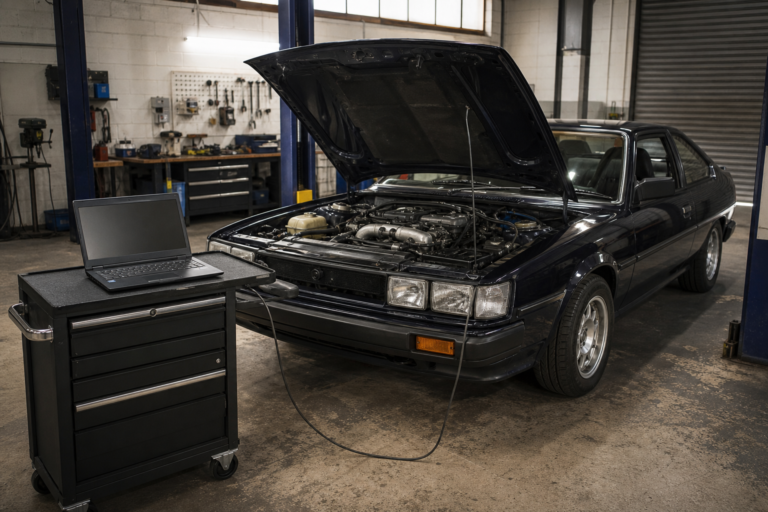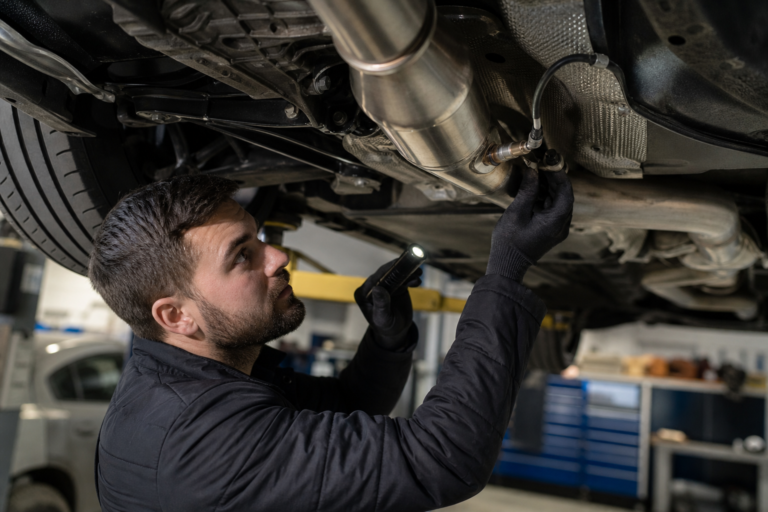

A DPF warning light can appear because a normal regeneration was interrupted, but that is only one possibility. Before assuming the filter is blocked, the sensible first step is to check the vehicle’s fault codes and live diagnostic data alongside its recent driving pattern.
If the warning has returned after a suitable drive, the vehicle has reduced power, or other engine-management warnings are present, do not keep attempting longer or faster drives in the hope that it will clear. A failed regeneration may be the result of an incorrect sensor reading, excessive soot loading, a temperature-control issue or another engine fault that is preventing the regeneration from completing.
What a DPF regeneration is trying to do
A diesel particulate filter (DPF) collects soot from the exhaust. The engine management system periodically raises exhaust temperature to burn accumulated soot into a much smaller quantity of ash. This is regeneration.
The ECU relies on several inputs to decide whether regeneration is needed and whether it can proceed safely. Depending on the vehicle, these can include differential pressure across the filter, exhaust-gas temperatures, engine coolant temperature, fuel level, engine speed and fault-code status.
That matters because a warning light may indicate either a genuinely high soot load or a problem with the information and operating conditions the ECU needs to manage the process.
The first checks to make after a DPF warning light
1. Read the handbook before attempting a drive cycle
Manufacturers give different instructions for their warning lights and regeneration procedures. Check the vehicle handbook for the exact lamp, any accompanying messages and the recommended action.
Do not attempt a self-directed regeneration drive if the handbook advises against it, if the vehicle is in reduced-power mode, or if there are additional warnings that point to an engine, oil-pressure or temperature problem.
2. Consider how the vehicle has been used recently
Frequent short journeys, long periods of idling and repeated cold starts can make it harder for some diesel vehicles to complete an active regeneration. This pattern can support the possibility of an interrupted cycle, but it is not proof. A vehicle used mainly on longer journeys can still develop a DPF-related warning because of a sensor or engine fault.
3. Check whether there are other symptoms
A DPF lamp on its own may be an early warning. It becomes more important to diagnose promptly if it is accompanied by any of the following:
- Engine-management warning light or a warning message
- Noticeable loss of power or reduced-performance mode
- Repeated cooling-fan operation after switching off
- Unusual fuel consumption
- Rough running, hesitation or difficult starting
- Excessive smoke, abnormal exhaust smell or new mechanical noises
- An oil level that is unexpectedly high
These symptoms do not identify one failed part by themselves. They do, however, make a proper diagnostic check more appropriate than repeated regeneration attempts.
Interrupted regeneration or a fault? The key differences
| Possible situation | What may point towards it | What should be checked |
|---|---|---|
| Interrupted regeneration | Predominantly short-trip use, no major drivability issue and no additional relevant fault codes. | Manufacturer guidance, current fault-code status and whether the ECU is allowing regeneration. |
| Differential-pressure sensor or hose fault | Pressure readings that do not make sense for engine speed and load, relevant stored codes, damaged or blocked pressure hoses. | Live data, sensor wiring and connectors, hose routing, contamination and condition. |
| Excessive soot loading | Repeated warnings, reduced power or a calculated soot load that is too high for a normal drive regeneration. | Measured and calculated loading data, pressure readings and the cause of soot accumulation before any regeneration procedure. |
| Non-combustible ash accumulation | A filter that remains restrictive despite successful soot regeneration, usually after substantial service use. | Manufacturer-specific diagnostic information and inspection to determine whether cleaning or replacement is appropriate. |
| Underlying engine or aftertreatment fault | Other fault codes, incorrect temperature readings, boost or air-flow issues, EGR-related faults, poor combustion or coolant temperature that does not reach normal operating range. | A wider diagnostic process rather than treating the DPF as the root cause. |
Why the differential-pressure sensor deserves early attention
The differential-pressure sensor compares exhaust pressure before and after the DPF. The ECU uses that information to estimate restriction and help control regeneration. If the sensor, its wiring or the small pressure hoses are damaged, blocked, split or contaminated, the ECU can be given an inaccurate picture of the filter’s condition.
An incorrect reading can lead to unnecessary DPF warnings, inhibit regeneration or make the system appear more restricted than it is. This is why diagnostic work should compare live readings with engine operating conditions rather than relying on a warning lamp alone.
For a closer look at this part of the process, read DPF Differential Pressure Sensor Faults: What the Readings Can Tell You.
Why a forced regeneration is not always the right first answer
A workshop-initiated regeneration can be useful on the right vehicle, with the right preconditions and manufacturer procedure. It is not a universal repair. If the actual problem is a faulty pressure sensor, an exhaust temperature issue, an air or boost leak, an EGR fault or poor engine running, forcing regeneration may not resolve the cause.
Regeneration also involves very high exhaust temperatures. It should only be carried out where the vehicle manufacturer’s instructions, safety requirements and diagnostic checks indicate that it is appropriate.
Before a workshop regeneration is considered, the diagnostic process should normally establish:
- Which fault codes are stored, including pending or history codes where available
- Whether any faults are preventing regeneration
- DPF differential-pressure readings at appropriate operating conditions
- Exhaust-gas temperature sensor plausibility
- Calculated soot load and any available ash-load information
- Condition of pressure hoses, electrical connectors and visible exhaust components
- Whether the engine is reaching and maintaining its intended operating temperature
- Whether air, fuel, EGR, boost-control or combustion faults could be creating extra soot
What not to do
- Do not ignore a recurring warning. Repeated unsuccessful regeneration requests can allow the problem to become more severe.
- Do not clear codes simply to see if the light stays off. This can remove useful diagnostic information and does not correct the cause.
- Do not assume every DPF issue is solved by a long drive. A drive cycle cannot repair a failed sensor, damaged hose or underlying engine fault.
- Do not rely on additives as a diagnosis. A product may have a place in a manufacturer-approved maintenance approach, but it cannot confirm why regeneration has failed.
- Do not attempt a forced regeneration without suitable diagnostic equipment, manufacturer information and safety precautions.
When professional DPF diagnostic support is appropriate
Arrange diagnostic support if the warning remains after following the handbook’s instructions, returns quickly, appears with an engine-management warning, or is accompanied by reduced power or poor running. This is also sensible before spending money on a sensor, cleaning service or replacement filter, because the underlying cause should be identified first.
Limited Edition Tuning provides DPF/CAT diagnostic support. If you need help assessing DPF-related fault codes and diagnostic data, contact Limited Edition Tuning to discuss the vehicle and its symptoms.
Frequently asked questions
Can a DPF warning light clear itself?
It can clear if the vehicle successfully completes regeneration and there is no continuing fault. Whether a drive cycle is appropriate depends on the vehicle’s handbook guidance, warning messages and overall condition.
Can a blocked DPF cause loss of power?
Yes. If the ECU identifies a serious DPF-related condition, some vehicles may reduce engine performance to protect components. However, loss of power can also be caused by many non-DPF faults, including air, fuel, boost-control and sensor issues.
Will regeneration remove ash from a DPF?
No. Regeneration burns soot, but ash remains in the filter. Over time, ash accumulation can reduce the filter’s available capacity and may require a different solution once the underlying condition has been confirmed.
Does a DPF warning mean the filter needs replacing?
Not necessarily. The warning may relate to soot loading, an interrupted regeneration, sensor data, damaged pressure hoses or another fault affecting the regeneration process. Diagnosis should come before deciding on cleaning or replacement.
The practical takeaway
Start with the handbook, the vehicle’s recent use and a full diagnostic scan. Then assess the readings that control regeneration, especially DPF pressure and exhaust temperature data, before deciding whether a normal drive regeneration, workshop procedure, repair or further engine diagnosis is needed.
That approach avoids treating the DPF warning light as a diagnosis in itself and focuses on the fault that caused it.