An aftermarket exhaust does not automatically rule out an ECU remap, but a tuner needs to know what has been changed before deciding how to assess the vehicle. The exhaust type, which parts have been replaced, any warning lights or fault codes, and the vehicle’s existing condition can all matter to that initial assessment.
If you are checking ECU remapping aftermarket exhaust compatibility, do not assume that a louder exhaust needs a different map, that a remap will clear an exhaust-related warning light, or that tuning makes emissions compliance automatic. Share accurate details first and ask the tuner to assess the vehicle and its specific hardware.
What exhaust information should you give the tuner?
“Aftermarket exhaust” can describe anything from a replacement rear silencer to a system that changes components further along the exhaust. Those are not necessarily equivalent from a calibration or emissions-assessment perspective. Give the tuner enough detail to identify what is actually fitted.
- Vehicle details: make, model, year, engine and, if available, the engine code or registration number.
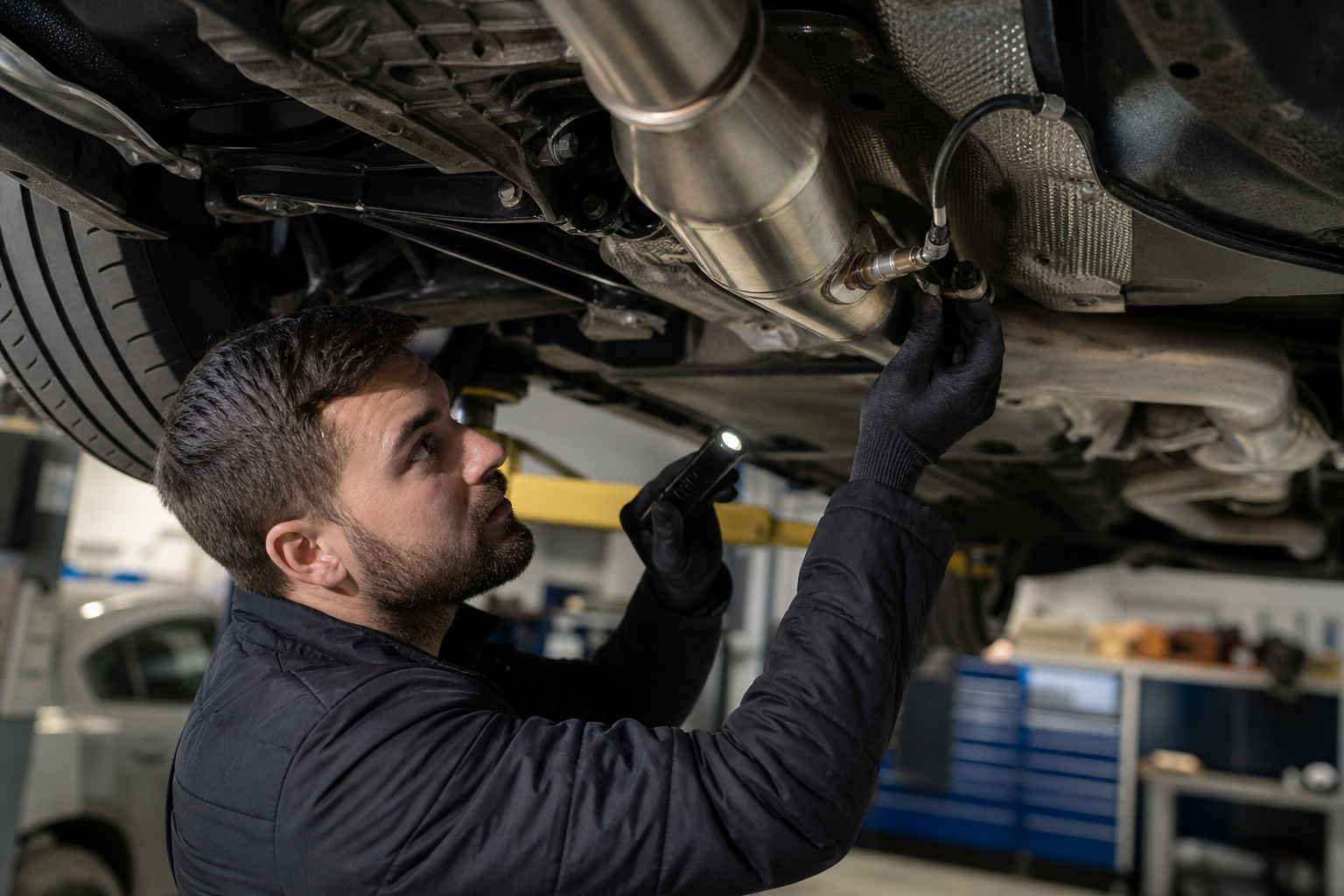
- Exhaust parts changed: explain whether the system is a rear section, a cat-back system, a downpipe or another configuration. If you are unsure of the part names, describe where the replacement starts and ends.
- Emissions-control components: say whether the original catalytic converter or other emissions equipment remains fitted, has been replaced, or has been removed. Do not guess if you do not know.
- Sensors and valves: mention any changes to sensor locations, wiring, exhaust valves or related components.
- Part details: provide the manufacturer, part number, product information or installation paperwork if available.
- Current symptoms: report warning lights, stored fault codes, unusual noises, exhaust leaks or changes in how the vehicle drives.
Clear photographs of the parts and their fitment can help explain a setup when you do not have paperwork. Be candid about previous software changes or faults; missing information can make an initial assessment less reliable.
Why the exhaust configuration can affect calibration decisions
The exhaust layout is part of the context a tuner uses to assess the vehicle. A change limited to the rear silencer is different from a change that affects components associated with exhaust monitoring or emissions control. The exact implications depend on the vehicle and the parts fitted, so compatibility should be assessed rather than assumed.
A tuner may need to establish whether the existing setup is complete, correctly fitted and free from obvious leaks or faults before deciding what calibration work is appropriate. If a warning light is already on, the vehicle may need fault-code diagnosis before any remap is considered. A software change should not be treated as a substitute for identifying the cause of a fault.
This is an initial assessment, not a promise that a particular exhaust will work with a particular calibration. The decision depends on the vehicle, its hardware and its condition. If the setup cannot be identified confidently, ask what information or checks are needed before proceeding.
Warning lights: diagnose first, do not assume a remap will fix them
An engine warning light is a signal to investigate, not proof that the exhaust is the cause. The sensible first step is to record the fault codes and have them assessed in context. A code can help direct diagnosis, but it should not be treated as a complete explanation on its own.
Tell the tuner if the warning appeared after the exhaust was fitted, whether it is intermittent, and whether any parts or wiring were changed at the same time. If you have a diagnostic report, share it. Do not ask for a warning to be suppressed as a substitute for checking the underlying issue.
Limited Edition Tuning lists DTC Error Code Support and DPF/CAT Diagnostic Support among its services. If you are unsure whether your vehicle needs diagnosis or a remap assessment first, you can contact the team with the vehicle and exhaust details.
Does an aftermarket exhaust guarantee emissions compliance?
No. A remap does not make emissions compliance automatic, and an aftermarket part should not be assumed to preserve the vehicle’s compliance simply because the car runs smoothly. The UK MOT inspection includes checks relating to exhaust security, noise and visible emissions-control equipment; the applicable assessment depends on the vehicle and the parts fitted. The current DVSA inspection manual identifies missing, obviously modified or defective original emissions-control equipment as a defect in relevant cases. See the MOT manual’s exhaust-system guidance and emissions and nuisance guidance.
An MOT result is not a blanket approval of every modification or proof that a vehicle meets every requirement in every circumstance. If you are uncertain about the legal or emissions position of a particular exhaust, seek advice based on the exact vehicle and hardware. Do not rely on a remap to make removed or altered emissions equipment acceptable.
A practical pre-remap checklist
- Identify which exhaust sections have been replaced and whether emissions-control parts have changed.
- Gather part numbers, paperwork and clear photographs where possible.
- Report warning lights, stored codes, leaks, unusual noises and relevant recent repairs.
- Ask the tuner whether the configuration can be assessed as it stands and whether diagnosis is needed first.
- Discuss the intended calibration only after the vehicle and its modifications have been clearly identified.
If the car also has other modifications or you have concerns about its general condition, see the pre-remap health-check guide. For a wider explanation of what an ECU calibration changes, read what an ECU remap actually changes.
Before you book
Share the exhaust details before arranging calibration, especially if any emissions-related parts, sensors or warning lights are involved. That gives the tuner a chance to establish what is fitted and whether diagnosis or further information is needed. Limited Edition Tuning provides ECU remapping and diagnostic support from Sunderland; the right next step depends on the specific vehicle and its condition.