ECU remapping clutch slip is a concern worth addressing before tuning, particularly on a manual vehicle with an unknown service history or early signs of drivetrain trouble. A well-matched remap does not automatically cause a healthy clutch to fail. But if the clutch is already close to its limit, the extra torque available after tuning may make an existing weakness much easier to notice.
The important distinction is cause versus exposure. If a clutch begins slipping after a remap, that does not by itself prove that the software damaged it. It may mean the clutch had limited remaining capacity and can no longer transfer the higher torque being requested from it.
Why extra torque can bring clutch slip to the surface
In a manual transmission, the clutch transfers engine torque to the gearbox through friction between the clutch disc, pressure plate and flywheel. To work properly, those components need sufficient friction and clamping force to transmit the torque being applied.
A clutch does not simply have two states: working perfectly or completely failed. It can be marginal. It may cope during gentle driving, light throttle openings and lower engine loads, yet slip when the engine produces more torque in a higher gear or when accelerating hard from lower revs.
A remap can increase the torque the engine is able to deliver in parts of the rev range. That additional demand can reduce or remove the reserve that a worn or compromised clutch previously had. Clutch manufacturers describe the clutch’s job as transmitting engine torque, and note that slippage creates heat that can contribute to premature failure. Valeo’s clutch technical guidance provides a useful overview of that relationship.
This is why a driver may say, “the clutch only slipped after the remap”, even where the underlying wear or fault existed beforehand. The remap may have revealed the issue under conditions the vehicle had not previously been asked to handle.
What clutch slip usually feels like
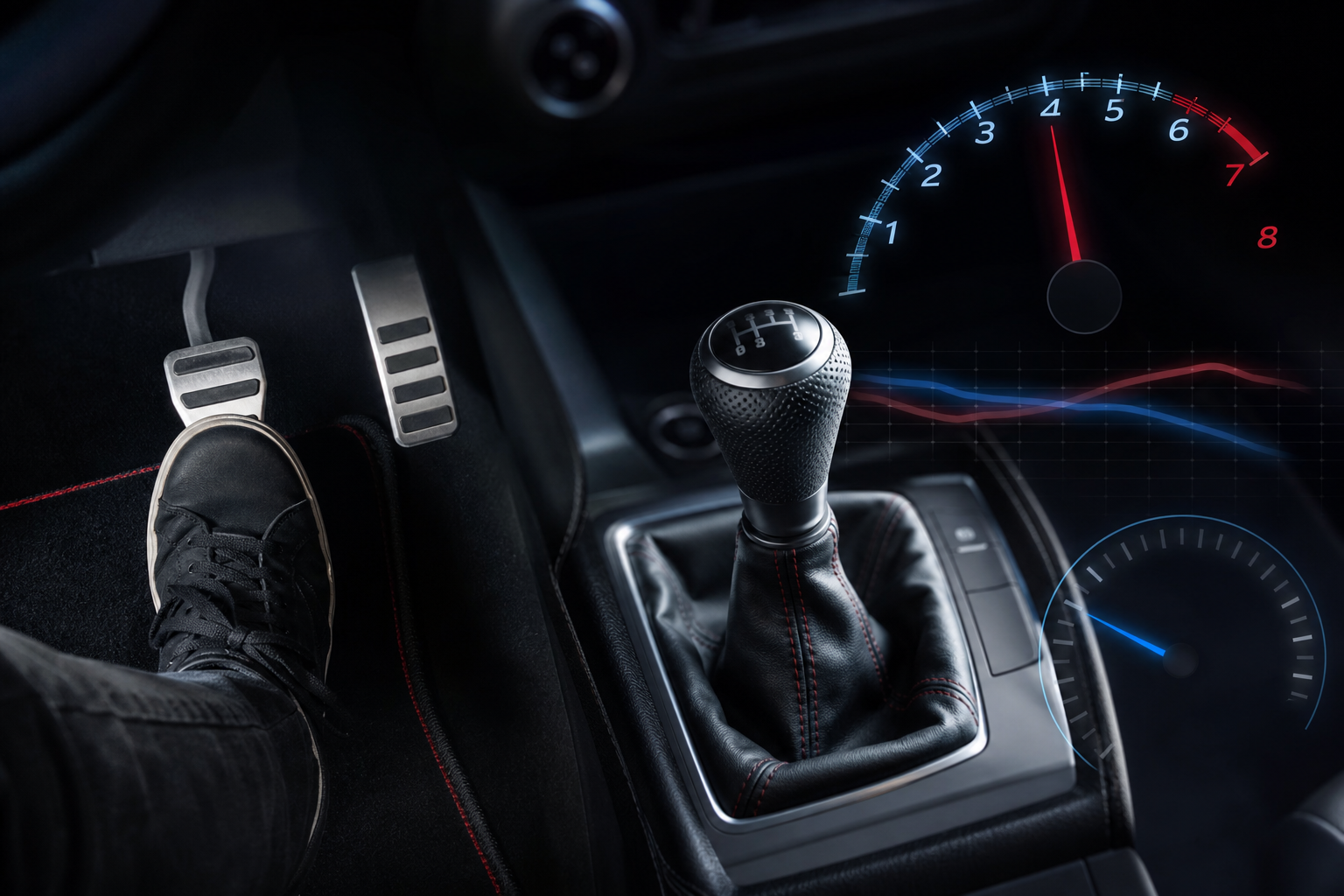
The most recognisable symptom is a mismatch between engine speed and road speed. The rev counter rises more quickly than expected when you accelerate, but the vehicle does not pick up speed by the same amount.
It is often most noticeable:
- under firm acceleration rather than gentle driving;
- in a higher gear, where the engine is under greater load;
- when accelerating from low or mid-range engine speed;
- when carrying a load, towing or driving uphill;
- after the clutch has become hot.
Some drivers also notice a burning smell after repeated slipping. Do not keep carrying out hard-acceleration checks if you suspect a problem: deliberate slipping adds heat to already stressed friction surfaces and may worsen the condition.
Symptoms that are not automatically clutch slip
Not every drivability concern after tuning points to the clutch. Hesitation, misfiring, reduced-power operation, turbo-control faults, traction-control intervention and gearbox behaviour can all feel like a loss of drive in certain situations. A slipping clutch is specifically characterised by engine revs rising without a proportional increase in vehicle speed while a gear is engaged.
That is why a proper diagnosis matters. Replacing parts or altering calibration based on one vague symptom can be expensive and may fail to address the real cause.
Reasons a clutch may have little torque reserve
Normal wear of the friction material is one possible reason, but it is not the only one. A clutch can also lose its ability to transmit torque because of contamination, heat damage, pressure-plate issues, release-system faults or flywheel-related problems. Oil or grease contamination on clutch friction surfaces can reduce power transmission and lead to slip, according to Schaeffler’s REPXPERT technical guidance.
The condition of the vehicle matters as much as its age or mileage. Two otherwise similar vehicles can have very different clutch condition depending on how they have been driven, maintained and repaired.
| Potential issue | Why it matters before tuning |
|---|---|
| Worn friction material | There may be less capacity to transmit additional torque under load. |
| Contamination from oil, grease or fluid | The clutch may slip even if the friction material is not simply worn out. |
| Heat-related damage | Repeated slip can affect the friction surfaces and reduce consistency. |
| Pressure or release-system fault | The clutch may not clamp or disengage as intended. |
| Flywheel concerns | Related components can affect the clutch system and should not be ignored during diagnosis. |
This table is not a remote diagnosis. Access to many clutch components requires significant dismantling, so the right inspection process depends on the vehicle and the symptoms present.
Why a pre-remap clutch assessment is sensible
A pre-tuning assessment is not about guaranteeing that no mechanical issue will ever occur. It is about identifying obvious warning signs before asking more of the drivetrain.
Before a Stage 1 or Stage 2 remap, it is sensible to consider:
- whether the clutch has slipped, juddered or smelled hot under load;
- whether the bite point, pedal action or gear engagement has changed noticeably;
- whether there are oil leaks or unresolved drivetrain faults;
- whether engine warning lights, fault codes or poor running are present;
- how the vehicle will actually be used, including frequent heavy loads, towing or hard acceleration.
If there are clear slip symptoms before tuning, the sensible route is to have the mechanical cause assessed and resolved first. Increasing torque in the hope that the issue will disappear is unlikely to be productive.
For a broader checklist, read Is Your Car Ready for a Remap? The Pre-Tuning Health Check Explained. It covers why baseline vehicle condition should be considered before calibration changes are made.
Does every remapped manual car need a clutch upgrade?
No. It would be inaccurate to assume that every remapped vehicle needs an upgraded clutch. Suitability depends on the individual vehicle, its existing clutch condition, the engine’s torque delivery, the intended calibration and how the vehicle is used.
Equally, an uprated component is not a substitute for diagnosis. If the current clutch is slipping because of contamination, a hydraulic issue or another underlying fault, that cause needs to be understood rather than simply masked with a parts change.
It is also important not to treat torque figures in isolation. The way torque arrives across the rev range, the gear selected and the load on the vehicle all influence what the clutch experiences. Our guide to torque versus horsepower after a remap explains why torque is often the change drivers feel most clearly in everyday acceleration.
Manual, automatic and DSG vehicles are different cases
This article is mainly about conventional manual clutches. Automatic and dual-clutch transmissions have different designs, control systems and torque-management considerations. A sensation that resembles slipping in those vehicles should not be assumed to have the same cause as manual-clutch slip.
If you own a compatible dual-clutch vehicle, gearbox calibration may be relevant to how the transmission manages shift behaviour and torque limits. Read What Does a DSG Gearbox Remap Do? for a driver-friendly explanation. Any vehicle-specific suitability decision should still be based on its condition and configuration.
What to do if your clutch slips after a remap
- Stop repeated full-load testing. Avoid deliberately making the clutch slip to “check” it.
- Make a note of the conditions. Record the gear, engine speed, throttle input, incline and whether the engine was warm.
- Separate the symptom from the assumption. Confirm whether the revs are genuinely flaring without matching road speed.
- Arrange mechanical assessment. A qualified repairer can investigate the clutch and related drivetrain components.
- Discuss the tuning setup openly. Share the vehicle’s symptoms and intended use before any further calibration changes are considered.
Frequently asked questions
Can an ECU remap cause clutch slip?
A remap can increase torque demand on the clutch, which may expose a clutch that was already worn or compromised. Whether it is the direct cause in an individual case cannot be determined from timing alone; the vehicle needs proper diagnosis.
Will clutch slip happen immediately after a remap?
It can appear immediately if the clutch was already operating close to its limit, but it may only show under particular conditions such as a higher gear, a steep incline or a heavy load.
Can I continue driving with a slipping clutch?
It is best to minimise heavy-load driving and arrange assessment promptly. Continued slip creates heat and can make the problem worse.
Should I mention an old clutch before booking a remap?
Yes. Any known clutch, gearbox, warning-light or drivability issue is relevant information before tuning. Being clear about the vehicle’s condition helps set realistic expectations and supports a more appropriate decision.
Plan tuning around vehicle condition
The best approach is not to view a remap and a clutch as unrelated items. Engine software can change the torque available to the drivetrain; the clutch must be in suitable condition to handle the vehicle’s real-world use.
If you are considering ECU remapping in Sunderland and have noticed possible clutch slip or other drivability concerns, discuss them before booking. Contact Limited Edition Tuning to talk through your vehicle and the available tuning options. Where mechanical symptoms are present, have those assessed before proceeding with performance-focused calibration.